Web Application Development for Canadian Businesses
NETLAB builds web applications with the same frameworks and tools used by leading technology companies. Our development stack -- Astro, React, Next.js, Node.js, TypeScript, and PostgreSQL -- prioritizes performance, maintainability, and scalability. We deploy to Cloudflare Workers edge infrastructure for sub-100ms response times worldwide. Every line of code is TypeScript-first, version-controlled with Git, and deployed through automated CI/CD pipelines.
Our Technology Stack
We are deliberate about the technologies we use. Every framework and tool in our stack is chosen because it solves a specific problem better than the alternatives. We do not chase trends or adopt technologies for the sake of novelty. Our stack is production-tested across dozens of client projects and optimized for the types of applications Canadian businesses actually need.
Astro
Astro is our primary framework for content-driven websites -- business sites, portfolios, service pages, and marketing pages. Astro uses an Islands architecture that delivers zero JavaScript by default. Your pages are rendered as static HTML on the server, and interactive components (like forms, modals, or carousels) are hydrated individually only when needed. The result is websites that score 95-100 on Lighthouse performance, load in under one second, and provide an exceptional experience on mobile devices. This website -- netlab.ca -- is built with Astro.
React
React powers our interactive components and single-page applications. We use React for features that require complex state management -- shopping carts, multi-step forms, interactive dashboards, real-time data displays, and client portals. React's component-based architecture means we can build reusable UI elements that maintain consistent behavior across your application. We pair React with TypeScript for type safety, which catches bugs before they reach production.
Next.js
Next.js is our choice for full-stack applications that need server-side rendering, API routes, and dynamic content. It combines React's interactivity with server capabilities, allowing us to build applications where the frontend and backend are deployed together. We use Next.js for projects like course platforms, client portals, and data-intensive applications where pages need to be generated dynamically based on database content or user permissions.
Node.js & TypeScript
All of our backend development uses Node.js with TypeScript. TypeScript adds static type checking to JavaScript, which prevents entire categories of bugs and makes codebases easier to maintain as they grow. We use Express or Hono for API servers, handle authentication with JWT tokens or session-based auth, and build integrations with services like Stripe, AWS, and Google APIs. Writing TypeScript on both the frontend and backend means our team works in a single language across the full stack, reducing context-switching and improving development velocity.
PostgreSQL & Supabase
PostgreSQL is our database of choice for applications that need reliable, structured data storage. It handles complex queries, transactions, and relationships between data with decades of battle-tested reliability. For managed database hosting, we use Supabase, which provides PostgreSQL with built-in authentication, real-time subscriptions, file storage, and auto-generated APIs. Supabase lets us deliver full-featured backends without managing database servers, reducing both development time and ongoing infrastructure costs.
| Framework | Best For | Rendering | JavaScript Shipped |
|---|---|---|---|
| Astro | Content sites, portfolios, marketing | Static / SSR | Near-zero (Islands) |
| React | Interactive UIs, SPAs, dashboards | Client-side | Full React runtime |
| Next.js | Full-stack apps, dynamic content | SSR / SSG / ISR | Optimized per page |
| WordPress | CMS-driven, client-managed content | Server (PHP) | Varies by theme |
Technologies We Use
Development Process
Before writing any code, we define the technical architecture. This includes choosing the right framework for your project, designing the database schema, planning the API structure, and defining deployment requirements. We create technical specification documents that map every feature to a concrete implementation plan, so there are no ambiguities during development.
We develop in weekly sprints, delivering functional increments that you can review and test. Each sprint produces working features -- not mockups or progress reports, but actual running code. This iterative approach means you see progress every week, can provide feedback early, and can adjust priorities as your understanding of the project evolves.
Every feature is tested across browsers, devices, and screen sizes before it is merged into the main codebase. We write automated tests for critical business logic, test forms and checkout flows manually, and validate accessibility compliance. Our CI/CD pipeline runs automated checks on every code change, catching issues before they reach production.
Deployment is automated through CI/CD pipelines connected to GitHub. When code is merged to the main branch, it is automatically built, tested, and deployed to Cloudflare Workers. Zero-downtime deployments mean your users never experience interruption. After launch, we configure monitoring, error tracking, and performance dashboards so issues are detected and resolved before users notice them.
APIs & Third-Party Integrations
Modern web applications rarely exist in isolation. They connect to payment processors, email services, analytics platforms, CRM systems, and other tools your business relies on. We build clean, well-documented API integrations that connect your application to the services it needs.
Our most common integrations include Stripe for payment processing and subscription billing, AWS SES for transactional email delivery, AWS S3 for file storage, Google APIs for maps, analytics, and authentication, and social media APIs for content sharing and OAuth login. We also build custom RESTful APIs that allow your application to communicate with mobile apps, third-party services, or internal business systems.
Every API integration we build includes proper error handling, retry logic for transient failures, rate limiting to prevent abuse, input validation to reject malformed data, and comprehensive logging for debugging. We document every endpoint so your team (or future developers) can understand and extend the system without guessing how it works.
Web Application Projects
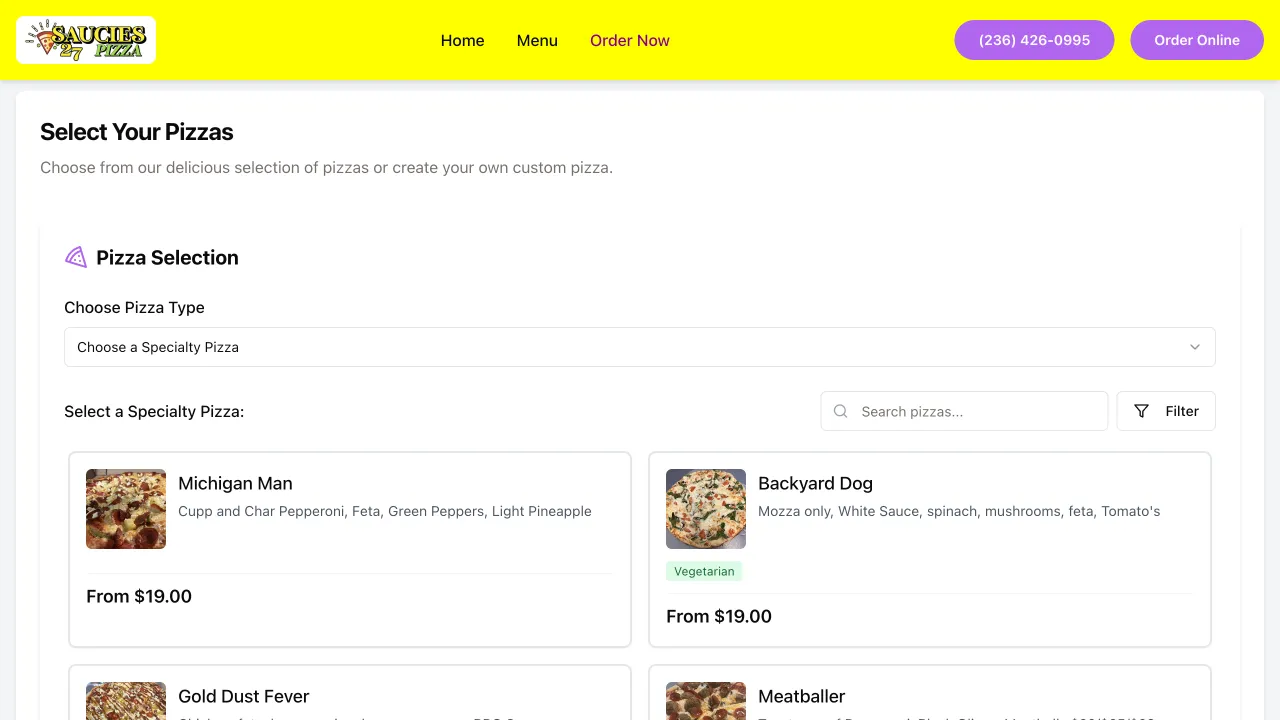
Here are examples of custom web applications we have built, featuring full-stack development with payment processing, databases, and real-time functionality.

Frequently Asked Questions
What programming languages and frameworks do you use?
Our primary tech stack includes TypeScript, JavaScript, HTML5, and CSS. For front-end frameworks, we use Astro for content-driven websites, React for interactive applications, and Next.js for full-stack applications that need server-side rendering. On the backend, we use Node.js with Express or Hono, PostgreSQL for relational databases, and Supabase for managed backend services. We deploy to Cloudflare Workers for edge performance. We also work with PHP and WordPress when a CMS-driven solution is the best fit.
What is edge deployment?
Edge deployment means your website or application runs on servers distributed around the world, serving content from the data center closest to each visitor. Instead of a single server in one location, edge platforms like Cloudflare Workers operate in over 300 cities globally. This reduces latency to under 50 milliseconds for most users, because data travels a shorter physical distance. It also provides built-in DDoS protection, automatic SSL, and the ability to handle traffic spikes without manual scaling.
Can you build custom web applications?
Yes. We build custom web applications for a wide range of use cases: course selling platforms with user authentication and payment processing, pizza ordering systems with real-time order tracking, inventory management dashboards, client portals, booking systems, and internal business tools. Every application is built with TypeScript for type safety, PostgreSQL for reliable data storage, and deployed to edge infrastructure for performance and reliability.
Do you build APIs and backend systems?
Yes. We build RESTful APIs and backend systems using Node.js, Express, Hono, and TypeScript. Our APIs handle authentication (JWT, OAuth, session-based), database operations with PostgreSQL, file storage with AWS S3 or Supabase Storage, email delivery with AWS SES, and integrations with third-party services like Stripe, Google APIs, and social media platforms. We follow API design best practices including proper error handling, rate limiting, input validation, and comprehensive documentation.
What is the difference between a website and a web application?
A website is primarily informational -- it presents content for visitors to read, like a business homepage, portfolio, or blog. A web application is interactive -- users can log in, submit data, make purchases, manage accounts, and interact with dynamic content. A restaurant's homepage is a website; their online ordering system is a web application. Many modern projects combine both: a marketing website with an embedded web application for specific functionality. We build both, and we help you determine which approach best serves your business goals.
How do you handle version control and deployment?
Every project uses Git for version control, hosted on GitHub. We follow a branching workflow where new features are developed on separate branches, reviewed through pull requests, and merged only after passing automated tests and code review. Deployment is automated through CI/CD pipelines -- when code is merged to the main branch, it is automatically built, tested, and deployed to production on Cloudflare Workers. This means zero-downtime deployments and the ability to roll back instantly if an issue is detected.
Ready to Build Your Application?
Whether you need a business website, a custom web application, or a full-stack platform, we will build it with modern technology that performs and scales. Contact us to discuss your project.